Finding a lung nodule on a CT scan can be frightening, especially when you don’t know what the finding means or what happens next. Lung nodules—sometimes called pulmonary nodules—are common, and many are benign. But every nodule deserves to be considered in the context of the person who has it.
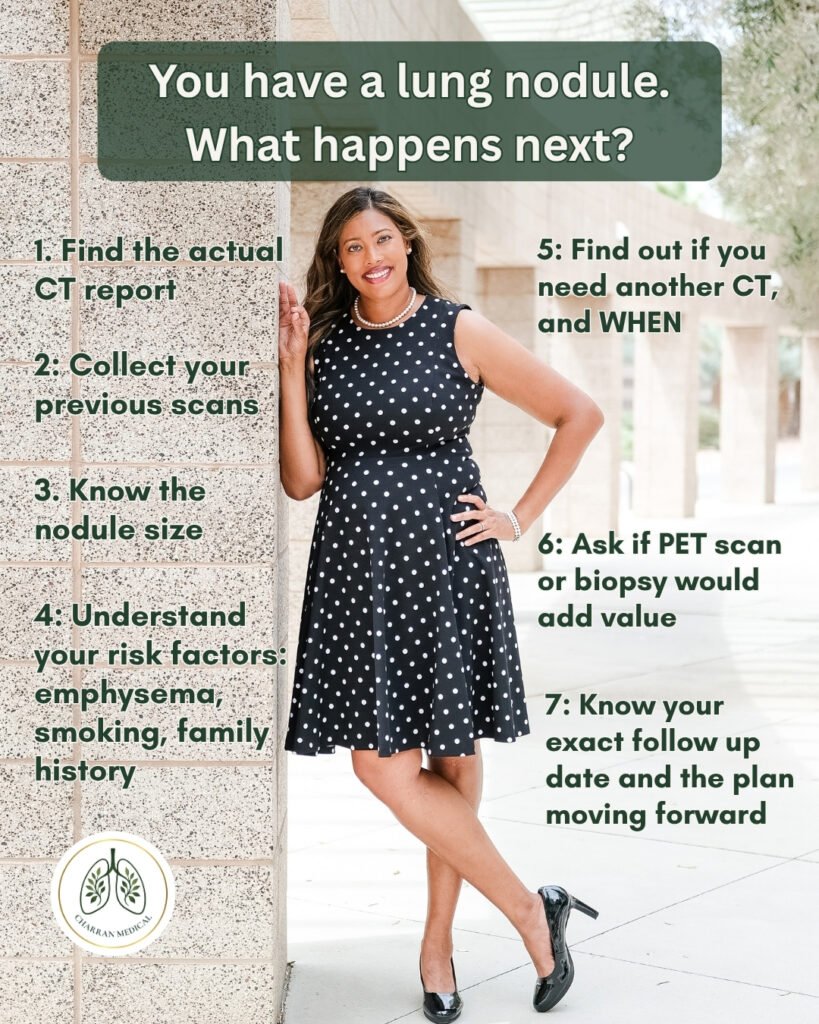
The next step depends on more than simply whether a nodule is present. Your doctor may consider the size and appearance of the lung nodule, whether it is solid or ground-glass, whether it has changed on previous CT scans, your smoking and exposure history, your age, and other individual risk factors. In some cases, no additional testing may be needed. In others, the appropriate next step may be a follow-up CT scan, PET scan, lung biopsy, or evaluation by a pulmonologist.
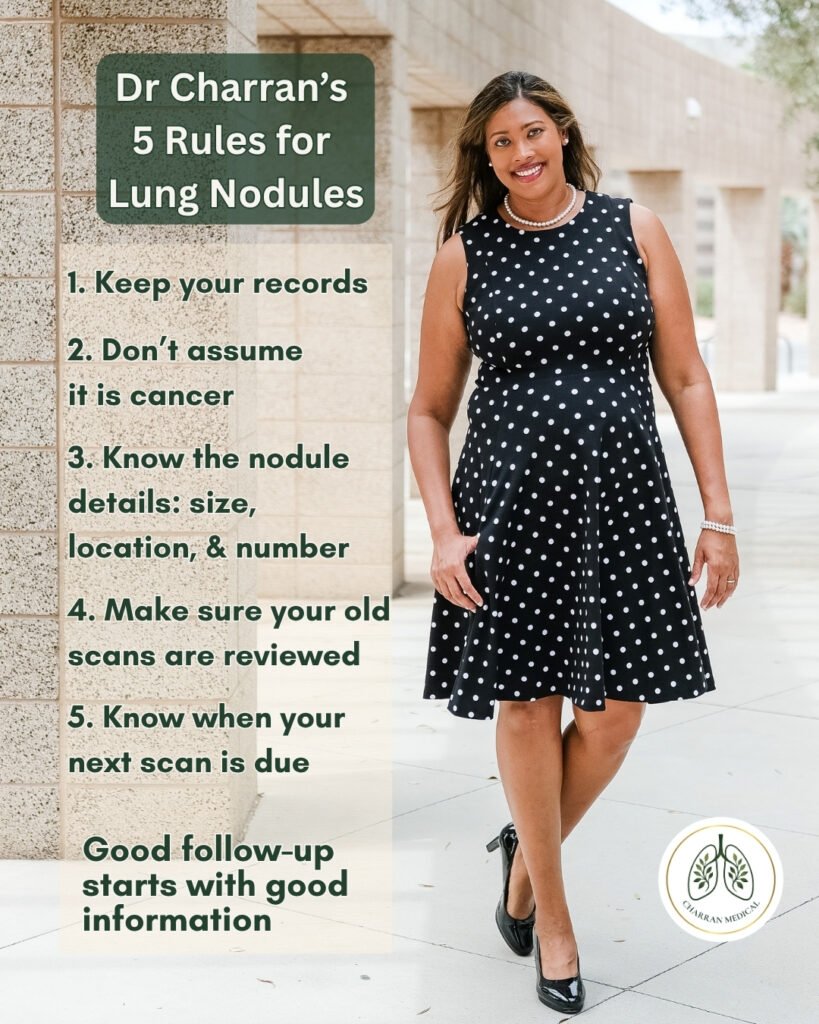
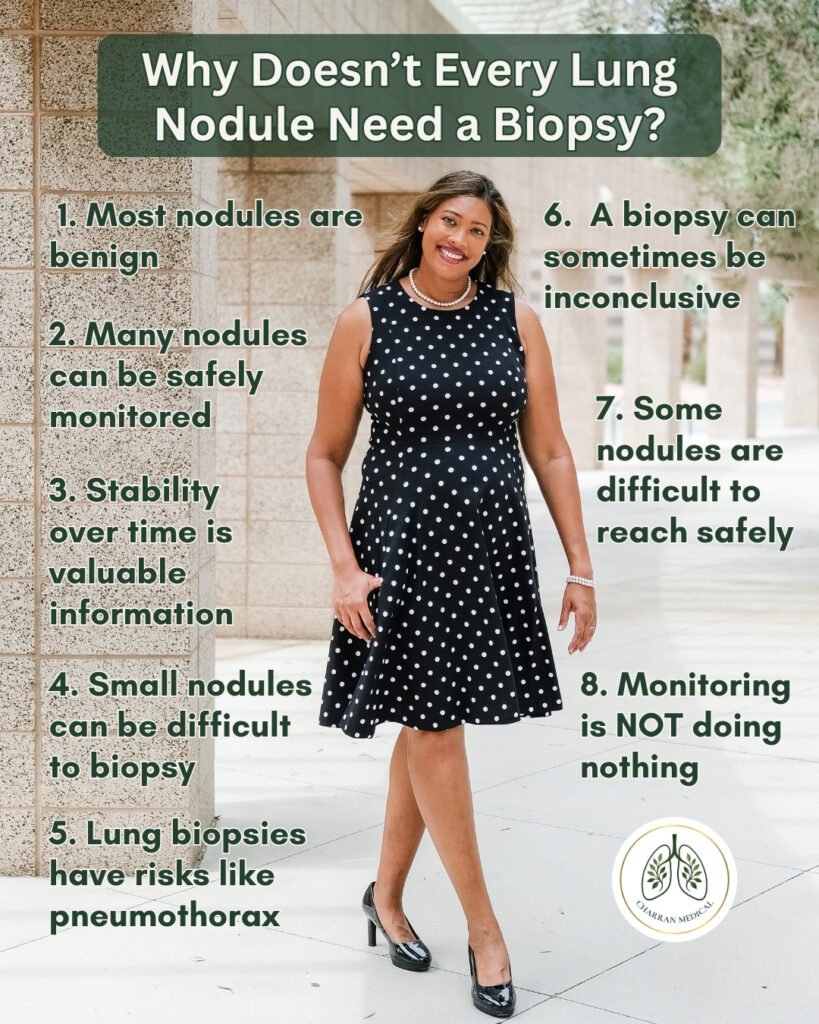
That is why understanding your actual CT findings—and knowing your follow-up plan—matters. Not every lung nodule needs a biopsy, and monitoring a nodule with repeat imaging does not mean that nothing is being done. Comparing CT scans over time can provide important information about whether a nodule is stable or changing.
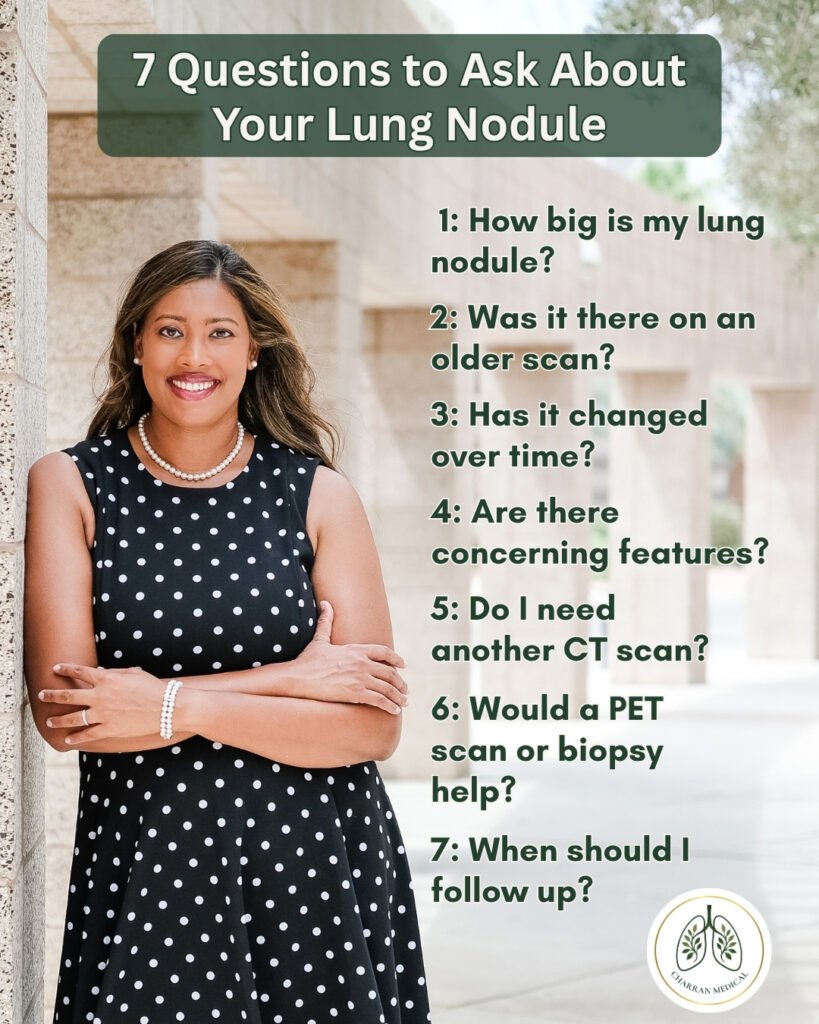
The Complete Lung Nodule Guide was created to help patients understand this process in greater detail. It covers the information in your CT report that matters, risk factors your doctor may consider, why previous imaging is important, how lung nodules are followed, when additional testing may be considered, and questions to ask at your next appointment.
Don’t panic—but don’t ignore it.
Get your records, understand what was found, know when your next CT scan is due, and make sure you have a clear follow-up plan.